

Oxygen Absorbers Explained: Why Freeze-dried Foods Need Them; The Do's & Don’ts, and Why It Matters
Posted by Ola Griffin on Jan 23rd 2026
Freeze-dried foods are one of the smartest choices for long-term food storage — lightweight, shelf-stable, and nutrient-dense. But even perfectly freeze-dried food can lose quality if it’s packaged incorrectly.
One of the most misunderstood parts of food storage is oxygen absorber sizing, along with common myths like doubling absorbers or relying on vacuum sealing alone. Let’s break down what actually matters — using science, not guesswork.
How Oxygen Absorber Sizing Really Works (CC Explained)
Oxygen absorbers are measured in cc, which stands for cubic centimeters.
This number tells you how much oxygen the absorber can remove, not how much food it protects.
CC rating = oxygen-removal capacity
Oxygen absorbers are designed to remove only the oxygen portion of the air inside a sealed container. Since oxygen makes up about 21% of air, the absorber only needs enough capacity to eliminate that portion — not the entire volume of the container.
Freeze-drying removes moisture, which is critical — but oxygen is still the enemy.
Oxygen causes:
- Oxidation
- Flavor loss
- Vitamin degradation
- Color changes
- Shortened shelf life
That’s why oxygen absorbers are essential for true long-term storage, especially with freeze-dried foods that contain lots of air pockets.
What Air Is Really Made Of (This Explains Everything)

How Oxygen Absorbers Actually Work
Oxygen absorbers use a controlled iron oxidation reaction:
- Each absorber is capacity-rated (50cc, 100cc, 300cc, etc.)
- It absorbs a specific volume of oxygen
- Once oxygen is removed, the reaction naturally stops, the oxygen absorber goes to sleep
✔️ Oxygen-free is oxygen-free
❌ You cannot make food “more oxygen-free” by adding extra absorbers
Note- since oxygen absorbers "ONLY" remove oxygen other gasses remain, which is rouchly 78% of the air volume.
 Do You Need to Double Up Oxygen Absorbers?
No — doubling oxygen absorbers is unnecessary and wasteful.
A single properly sized oxygen absorber already has the capacity to remove all available oxygen inside a sealed bag. Adding more does not improve shelf life or safety.
What doubling actually does:
- ❌ Wastes absorbers
- ❌ Increases cost
- ❌ Creates false confidence
Once the ~21% oxygen is gone, there is nothing left for a second absorber to remove.
What Determines the Correct Oxygen Absorber Size
Instead of doubling, focus on sizing correctly.
1️⃣ Container Size
- Pint, quart, half-gallon, gallon
- Flat vs gusseted stand-up pouches
2️⃣ Food Density
- Freeze-dried foods = light, airy, lots of trapped air
- Dense foods (rice, beans) = less air space
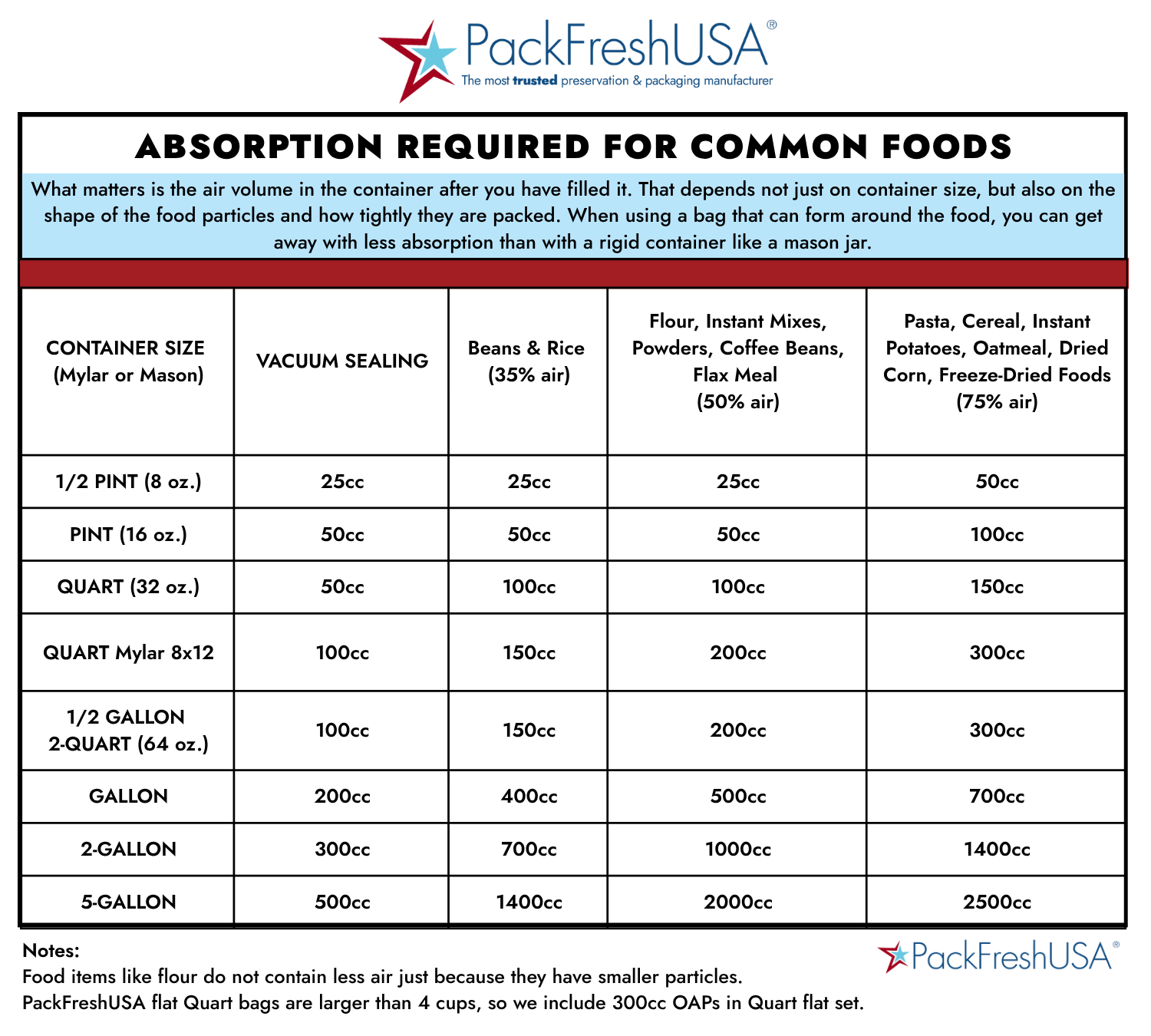
Oxygen absorber size is based on air volume and container size, not food weight.
Oxygen Absorber Sizing Guide for Freeze-Dried Foods
Best Practice:
If you’re unsure, use one slightly larger absorber — not doubling up.
Vacuum Sealing vs Oxygen Absorbers
This distinction is critical for long-term storage.
- Vacuum sealing removes air - but not all the air.
- Oxygen absorbers remove oxygen - less than 0.01 can be left.
- Air still contains oxygen — even after vacuuming
Vacuum ≠ oxygen-free
Oxygen absorbers are what protect long-term shelf life
Why Different Foods Need Different Protection
High-Oxygen-Risk Foods (OA Recommended)
Yes, freeze-dried foods need oxygen absorbers but here is a list of other foods that benefit the most from oxygen free-zone because oxygen causes oxidation, rancidity, or nutrient loss:
-
White rice
-
Dry beans & legumes
-
Wheat berries
-
Oats
-
Barley
-
Buckwheat
-
Dehydrated foods
-
Powdered milk
✔️ Mylar + properly sized OA
✔️ Vacuum sealing optional - but using a smaller size oxygen absorber
✔️ Longest shelf life achieved here
Other Blogs on Oxygen Absorbers
Everything You Ever Wanted to Know About Oxygen Absorbers (But Were Afraid to Ask) - PackFreshUSA
Oxygen Absorber - The Myth, The Legend - PackFreshUSA
How This All Ties Together
✔️ Use oxygen absorbers only when the food needs them
✔️ Size for container + food density
✔️ Do not double up
✔️ Do not rely on vacuum sealing alone
✔️ Nitrogen (78% of air) is harmless — oxygen (21%) is the issue
Long-term food storage doesn’t have to be complicated or wasteful. When you understand what oxygen does, how different foods react, and why proper sizing beats doubling every time, everything clicks into place. The goal isn’t to use more products — it’s to use the right tools, the right way, based on real food science. Once oxygen is removed, nitrogen can stay, the reaction stops, and your food is protected. Store smarter, trust the science, and your pantry will reward you for years to come.
Happy prepping,
Ola D Griffin
Long-term Food Storage Expert
Customer Service, Safeguard Brands, Inc. dba PackFreshUSA
YouTuber Pandemic Prepsters - YouTube & Mimi.storytime - YouTube
Instagram - Ola Dee Griffin (@Preparedness101) • Instagram Photos And Videos
Tiktok - Oladeegriffin (@Oladeegriffin) | TikTok
Phone: (844) 857-8277 |
PackFreshUSA is featured in this Meat + Poultry Magazine article on using oxygen absorbers with jerky.
Check it out!